How AI Sales Assistance Helps UK Businesses Convert More Website Visitors into Customers
Website traffic has little commercial value when interested visitors cannot find the right answer, choose the right service or complete the next step. AI Sales Assistance helps businesses turn passive browsing into useful conversations, qualified enquiries and stronger sales opportunities.
Many Businesses Do Not Need More Traffic. They Need Better Conversion.
A website may attract hundreds or thousands of visitors every month and still produce disappointing sales results. Visitors arrive from Google, paid advertising, social media, referrals and email campaigns, but a large proportion leave without making contact.
In many cases, the problem is not the quality of the visitor. It is the gap between what the visitor wants to know and what the website makes easy to understand.
A potential customer may be unsure which product is suitable, whether a service applies to their situation, how much something costs, what happens next or whether the company can meet a particular requirement. When the answer is not immediately available, the visitor often continues researching elsewhere.
It does not replace a clear website, a capable sales team or strong customer service. It strengthens them by helping visitors at the exact moment they are deciding whether to continue.
What Is AI Sales Assistance?
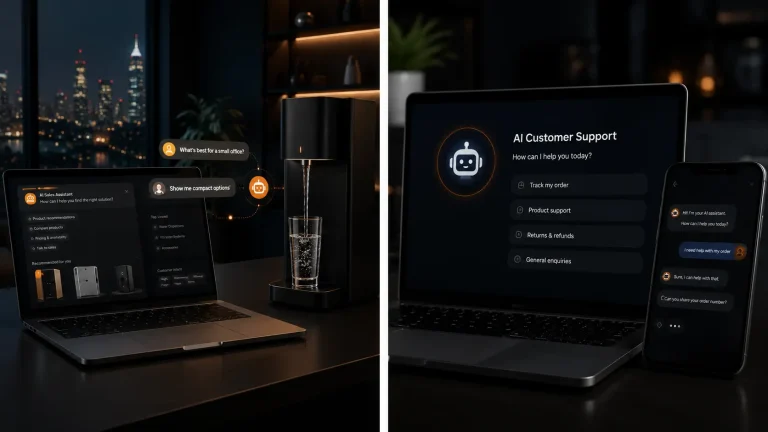
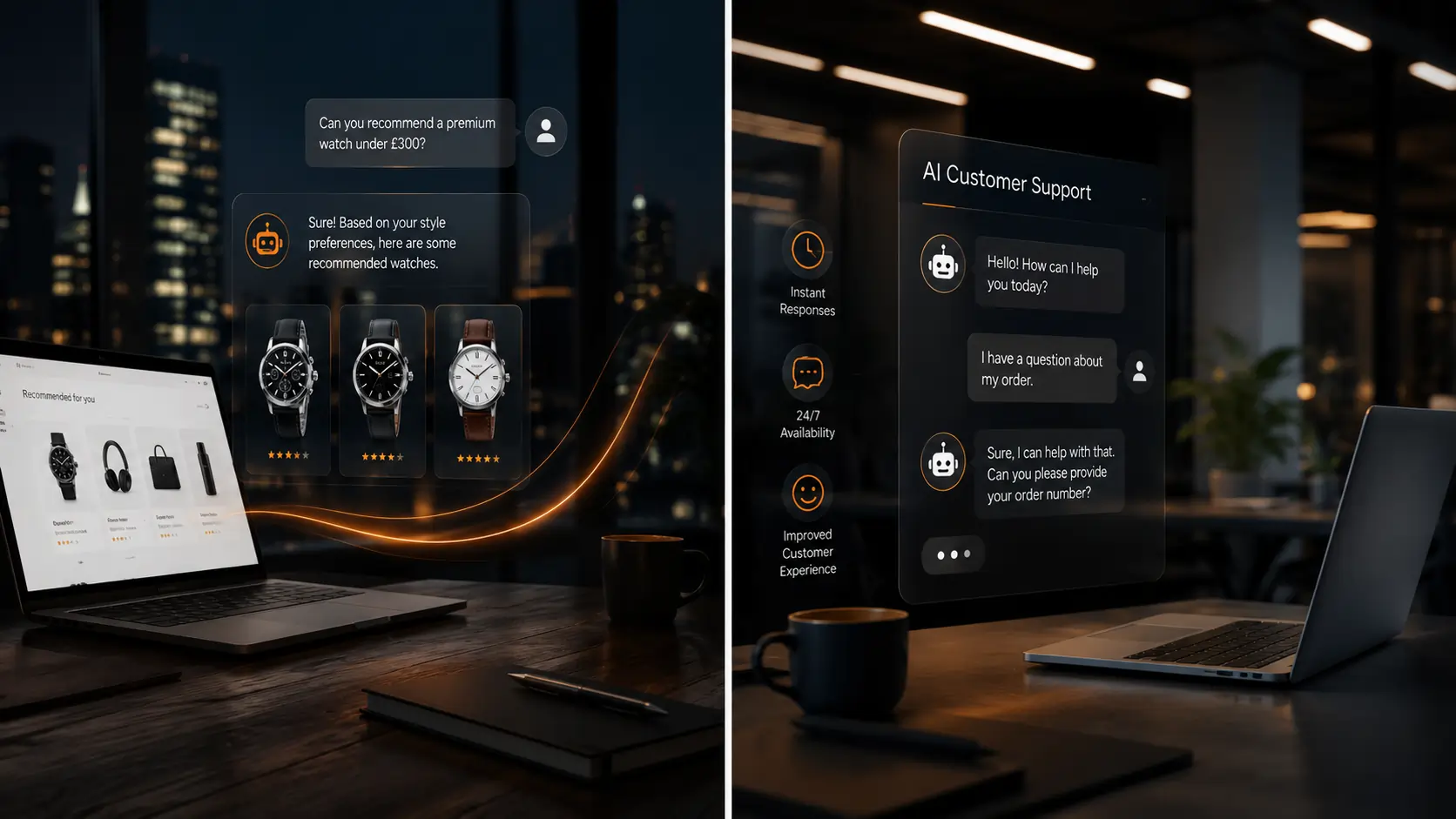
AI Sales Assistance is the use of conversational artificial intelligence to support visitors during the buying journey. It can answer questions, identify intent, recommend relevant options, collect lead details and direct customers towards the next appropriate action.
A basic website chatbot may only provide a list of fixed replies. A properly configured AI sales assistant can understand natural language and respond according to the visitor’s situation, using information approved by the business.
For example, a visitor may ask:
- Which service is suitable for a company of our size?
- Can this product integrate with our existing system?
- What option is best for my budget?
- Can somebody contact me about a quotation?
- Do you provide this service in my location?
- What information do you need before we begin?
Instead of forcing the visitor to search across several pages, the assistant can provide a direct answer and guide them towards a relevant service page, quotation request, consultation or product.
AITC develops this type of functionality through its AI chatbot services and, where deeper integrations are required, custom AI development.
The purpose of an AI sales assistant is not to create more conversation. It is to help the right visitor make the right decision with less friction.
Why Interested Website Visitors Leave Without Enquiring
A traditional website expects visitors to navigate menus, interpret service descriptions, compare options and decide what to do next without assistance.
That works for visitors who already understand the offer. It is less effective for people who are interested but uncertain.
Information is difficult to find
Important answers may be spread across product pages, service pages, FAQs and policy sections. The visitor gives up before finding the answer.
There are too many options
Several similar services or products can create decision fatigue. The visitor may postpone the decision rather than risk choosing incorrectly.
The business is unavailable
Buying interest often appears outside working hours. A visitor who must wait until the next day may contact a competitor instead.
The contact form asks too much
Visitors may not be ready to complete a long form before they know whether the company can solve their problem.
AI Sales Assistance reduces these barriers by allowing visitors to explain what they need in their own words.
This creates a more natural customer journey. The visitor receives useful guidance before being asked to provide contact details or commit to a purchase.
How AI Sales Assistance Can Increase Website Conversions
Immediate answers
The assistant can respond during evenings, weekends and busy periods, helping visitors while their buying intent is still active.
Personalised recommendations
It can ask a small number of relevant questions and recommend the most suitable product, service or next step.
Better lead qualification
It can gather project type, location, budget, timescale or technical requirements before passing the enquiry to the sales team.
Less form abandonment
Visitors can begin with a simple question rather than committing immediately to a detailed enquiry form.
It answers buying questions at the right moment
Most websites contain useful information, but not every visitor knows where to find it. An AI website assistant can surface that information immediately.
If a visitor asks whether a service is suitable for a small company, the assistant can explain the relevant criteria and direct them towards the correct page. If a customer asks about product compatibility, the assistant can provide an approved answer or refer the question to a person.
It improves product and service discovery
Ecommerce sites often lose customers because product categories are too broad or specifications are difficult to compare. Professional service firms face a similar problem when several services overlap.
An AI sales chatbot can simplify the choice by asking about the visitor’s objective, budget, preferred features or current situation.
It creates a more useful handover
A standard contact form may provide only a name, email address and short message. An AI-assisted enquiry can include the service required, the questions already answered and the factors influencing the decision.
This allows the sales team to begin the follow-up with context rather than repeating the entire discovery process.

AI Sales Assistant Use Cases for UK Businesses
The best implementation depends on how the business sells, the questions customers ask and the systems already in use.
| Business type | Common website problem | How AI Sales Assistance helps |
|---|---|---|
| Ecommerce retailer | Customers struggle to compare products | Asks preference questions and recommends suitable products |
| Professional services firm | Visitors do not know which service they need | Identifies the requirement and routes the visitor correctly |
| Technology company | Complex services require explanation | Answers approved technical questions and captures project requirements |
| Property or facilities company | Enquiries arrive without enough information | Collects location, scope, urgency and service type before handover |
| Training provider | Visitors are uncertain about programme suitability | Explains eligibility, programme differences and the correct application route |
| B2B supplier | Buyers need specification and suitability guidance | Answers product questions and prepares structured quotation requests |
Example: professional services
Consider a consultancy offering strategy, implementation and ongoing support. A visitor may understand the problem but may not know which service applies.
The AI assistant can ask what the visitor wants to achieve, whether they already have a system in place and when they want to begin. It can then recommend the most relevant service and offer a consultation.
Example: ecommerce
An ecommerce visitor may be choosing between several similar products. The assistant can ask about intended use, budget and preferred features, then display suitable options.
The recommendation must be based on accurate product information. The assistant should not invent specifications, availability or guarantees.
Example: B2B lead generation
A B2B company may receive enquiries that require several follow-up emails before the opportunity can be assessed. An AI sales assistant can collect company size, project type, expected timescale and system requirements during the first interaction.
The result is a more useful enquiry and a faster response from the appropriate team member.
AI Sales Assistant vs Live Chat
AI Sales Assistance and live chat solve different parts of the customer journey. In many situations, the strongest approach combines both.
| Area | AI sales assistant | Traditional live chat |
|---|---|---|
| Availability | Can operate continuously | Depends on staff availability |
| Response time | Immediate for supported questions | May involve waiting |
| Conversation volume | Can handle multiple visitors simultaneously | Limited by agent capacity |
| Consistency | Uses approved business information | Responses may vary between team members |
| Complex judgement | Should remain within defined boundaries | Better for unusual or sensitive cases |
| Relationship building | Useful for early-stage guidance | Stronger for negotiation and detailed consultation |
A sensible workflow allows the AI assistant to manage common questions and initial qualification, then transfer complex, sensitive or high-value opportunities to a person.
How to Implement AI Sales Assistance Properly
Businesses often begin by choosing a chatbot platform. The more effective starting point is the customer journey.
Before selecting technology, identify where visitors hesitate, which questions delay decisions and which enquiries consume unnecessary sales time.
-
Define the commercial objective.
Decide whether the assistant should generate enquiries, recommend products, arrange consultations, qualify opportunities or support purchases. -
Review the customer journey.
Identify the pages where visitors leave, the questions customers ask repeatedly and the objections that prevent action. -
Prepare reliable business information.
Consolidate product data, service descriptions, policies, qualification rules, pricing guidance and approved answers. -
Design useful conversations.
Plan how the assistant identifies intent, answers questions, asks for relevant information and recommends the next step. -
Set clear boundaries.
Define what the assistant may answer, what requires confirmation and when a conversation must be transferred to a person. -
Connect the right systems.
Where appropriate, integrate the assistant with a CRM, booking platform, product database, email system or internal workflow. -
Test real customer questions.
Test clear, unclear and unexpected requests before launch. Review whether the answer is accurate, useful and commercially appropriate. -
Improve it using evidence.
Review conversations, unanswered questions, lead quality and abandonment points. Optimise the assistant continuously.
AITC combines strategy, conversation design, technical implementation and performance review. Businesses can review relevant client results and further guidance within the AITC insights section.
What Should a Business Measure?
The number of conversations is not a reliable measure of success. An assistant may receive many messages without producing meaningful commercial outcomes.
Useful performance measures include:
- Percentage of visitors who engage with the assistant.
- Number of qualified leads generated.
- Conversion rate from conversation to enquiry or purchase.
- Lead quality compared with standard contact forms.
- Most common buying questions and objections.
- Conversation abandonment points.
- Percentage of questions answered successfully.
- Human handover rate and reasons for escalation.
- Bookings, quotations or purchases influenced by the assistant.
- Sales team time saved during initial qualification.
These measurements should be reviewed with website analytics and sales data. A business may compare the behaviour of visitors who interact with the assistant against visitors who do not.
AI Sales Assistance improves the on-site customer journey. It does not replace the need to attract relevant visitors. Businesses that also need stronger organic search visibility can review AITC’s GEO and SEO services.
Accuracy and Governance Matter More Than Novelty
An AI sales assistant represents the business in front of potential customers. Incorrect answers, invented claims or unsuitable recommendations can damage trust quickly.
The assistant should use controlled, current and approved information. It should be reviewed whenever products, services, policies, availability or pricing arrangements change.
Essential safeguards
- Use verified business content as the main information source.
- Do not allow the assistant to invent prices or guarantees.
- Make uncertainty clear when human confirmation is required.
- Provide an obvious route to human support.
- Collect only necessary customer information.
- Review privacy, security and data-retention requirements.
- Restrict access to conversation records.
- Test responses regularly after launch.
The correct technology depends on the required integrations, information sensitivity, operating cost and level of control. A platform should not be selected simply because it is fashionable or produces an impressive demonstration.
How to Choose the Right AI Sales Assistant
The best AI sales assistant is the one that fits the business process, provides reliable answers and can be maintained properly.
Before choosing a solution, ask:
- Can it use our approved product and service information?
- Can we control what it is allowed to say?
- Can it recommend different actions based on visitor intent?
- Can it capture structured lead information?
- Can it integrate with our CRM, calendar or ecommerce system?
- Can visitors reach a person easily?
- Can we review conversation quality and unanswered questions?
- How is customer data processed and stored?
- Can the assistant be improved without rebuilding it?
- Who will maintain its information after launch?
Turn More Website Visitors into Qualified Sales Opportunities
AITC can assess your website, identify where potential customers are dropping out and design an AI sales assistant around your products, services and sales process.
The objective is not to install another generic chatbot. It is to create a useful sales experience that answers real questions, improves lead quality and supports measurable business growth.
Discuss Your AI Sales AssistantAI Sales Assistance FAQs
What is AI Sales Assistance?
AI Sales Assistance uses conversational artificial intelligence to answer buying questions, recommend suitable options, qualify leads and guide website visitors towards an enquiry, booking or purchase.
How can AI increase website conversions?
AI can increase website conversions by providing immediate answers, reducing uncertainty, recommending relevant products or services and helping visitors complete the next appropriate action.
Can an AI chatbot generate more sales?
Yes. An AI sales chatbot can support sales by answering objections, qualifying requirements and directing visitors towards products, consultations, quotations or purchases. Results depend on implementation quality and the strength of the underlying offer.
Should UK businesses use AI sales assistants?
UK businesses should consider AI Sales Assistance when they receive regular website traffic, answer repetitive buying questions, offer several similar services or lose potential enquiries outside working hours.
Is an AI sales assistant better than live chat?
AI is useful for immediate responses, repetitive questions and initial qualification. Live agents are better for complex judgement, negotiation and sensitive situations. Many businesses benefit from combining both.
Can AI recommend ecommerce products?
Yes. An ecommerce AI assistant can ask about budget, intended use, preferences or compatibility and recommend suitable products using approved product information and defined rules.
How does AI reduce abandoned enquiries?
AI reduces abandoned enquiries by helping visitors before they leave the website. It can answer concerns, confirm whether the business is suitable and collect contact details after providing useful guidance.
Will an AI sales assistant replace the sales team?
In most businesses, it should support rather than replace the sales team. The assistant can handle initial questions and qualification while people manage complex discussions, relationships and higher-value opportunities.
How long does implementation take?
The timescale depends on the number of services, the quality of source information, required integrations and the complexity of the customer journey. A focused implementation is usually faster than a custom system connected to several platforms.
What information does an AI sales assistant need?
It may need approved service descriptions, product information, qualification criteria, frequently asked questions, policies, pricing guidance and clear rules for human escalation.
AI Sales Assistance Should Solve a Real Customer Problem
AI Sales Assistance can help UK businesses convert more website visitors by making the buying journey faster, clearer and more useful.
It can answer questions immediately, recommend relevant products or services, qualify enquiries and give the sales team better information before follow-up.
The technology alone does not guarantee results. Success depends on accurate information, clear conversation design, sensible escalation rules and ongoing performance review.
Begin by identifying where customers hesitate. Review the questions your team answers repeatedly. Decide which commercial action matters most. Then build the assistant around those needs.
To explore a tailored AI sales assistant for your business, contact AITC.